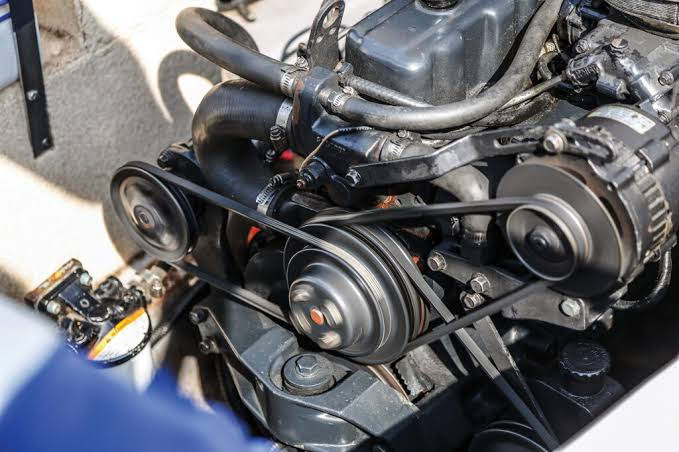
Anyone who’s docked a boat here long enough has a corrosion story. A prop that looked fine in the spring, then showed pitting by August. A shaft that seized up after a season of sitting in the bay. Salt air and saltwater don’t just make things rusty; they actively eat away at metal in ways that catch even careful owners off guard. If you keep a boat anywhere near Great Egg Harbor Bay, this isn’t theoretical. It’s maintenance reality.
What makes saltwater especially rough on boats is a process called galvanic corrosion, and understanding it changes how you think about every metal component on your vessel.
The Science Behind the Damage
Saltwater is an excellent conductor, which is exactly why it’s so destructive to boat hardware. When two dissimilar metals sit in electrical contact while submerged, they form a small electrical cell. One metal corrodes faster to protect the other, and depending on which parts are involved, that “sacrificial” role can end up being your propeller, shaft, or engine housing rather than something replaceable.
This is why manufacturers of marine and industrial components increasingly look at alternatives to traditional steel wherever bearings and moving parts are involved. Hybrid designs using ceramic balls instead of standard steel ones resist this kind of electrochemical wear far better, since ceramic doesn’t participate in the galvanic reaction the same way metal does. That matters in marine environments where corrosion isn’t a possibility; it’s a certainty over time.
Where Bearings Fit Into the Picture
Bearings sit inside pumps, winches, thrusters, and other moving components on a boat, and they take a beating from both friction and moisture. Standard steel bearings can develop pitting or seize entirely once corrosion sets in, often well before the rest of the part shows visible wear. Ceramic components, by contrast, hold up considerably longer in wet, salt-heavy conditions, which is part of why they’ve become more common in marine hardware over the past decade.
Practical Steps Beyond Material Choice
Material upgrades help, but they’re only part of the equation. Sacrificial anodes remain the first line of defense for most boats: zinc for saltwater, aluminum for saltwater and brackish conditions, magnesium reserved for freshwater only. These anodes corrode intentionally, protecting the more expensive components around them.
According to a detailed guide from West Marine’s boat maintenance resources, anodes should be replaced once they’ve worn down by about half, since waiting too long leaves critical components unprotected. Warmer water, pollution, and stray electrical current from marina shore power can all speed up the process, which is worth remembering for anyone docking at a busy marina through the summer months.
A Few Habits Worth Adopting
Checking anodes at the start and end of each season is the baseline. Inspecting props and shafts for early pitting, rather than waiting for obvious damage, catches problems while they’re still cheap to fix. And for boats spending long stretches in saltwater, it’s worth asking whether certain components (particularly bearings in high-wear areas) could benefit from more corrosion-resistant materials.
The Bottom Line
Saltwater will always be tougher on equipment than fresh water, and no material is entirely immune to it. But the gap between a boat that needs constant part replacement and one that runs reliably season after season often comes down to a few smart choices: proper anode maintenance, regular inspection, and materials selected with corrosion resistance in mind from the start. For local boat owners, that’s the difference between a good season on the water and an expensive one at the dock.