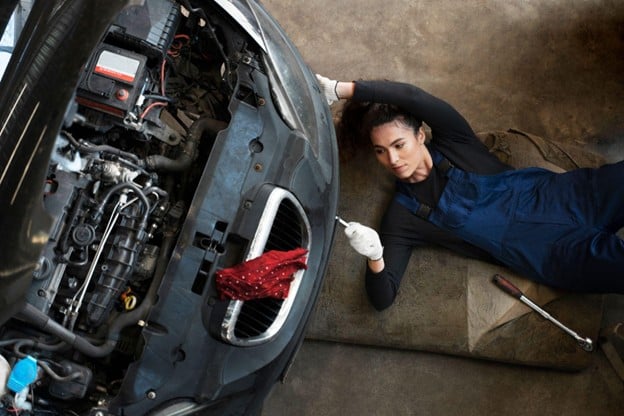
Vehicle technology has evolved rapidly over the past two decades, and Jeffrey Lux, NJ, highlights how modern automotive repair increasingly depends on diagnostic thinking rather than mechanical speed alone. While efficiency remains important in repair environments, today’s vehicles require technicians to analyze complex systems, interpret digital information, and identify problems with greater precision than ever before.
Modern automobiles now integrate advanced electronics, onboard computers, sensors, software systems, and interconnected components that influence nearly every aspect of vehicle performance. As a result, the repair process has become far more analytical than purely mechanical.
Technicians are no longer focused only on replacing parts quickly. They must now understand how systems communicate, how faults develop, and how to diagnose issues accurately before repairs even begin.
Why Modern Vehicles Require More Analytical Repair Approaches
Earlier generations of vehicles relied more heavily on straightforward mechanical systems that could often be diagnosed through visible wear, sound, or direct component failure. Modern vehicles operate very differently.
According to Jeffrey Lux, NJ, many repair challenges today involve identifying hidden electronic or software-related issues that may not present obvious mechanical symptoms.
Modern vehicles commonly include the following:
- Advanced sensor networks
- Computer-controlled engine systems
- Electronic steering and braking systems
- Driver-assistance technologies
- Integrated communication modules
These systems generate large amounts of operational data, requiring technicians to approach repairs with stronger analytical and troubleshooting skills.
Repair accuracy increasingly depends on interpretation rather than speed alone.
Jeffrey Lux, NJ, on the Growing Role of Diagnostic Technology
Diagnostic tools have become central to modern automotive repair because vehicles now rely heavily on electronic communication between components.
Technicians regularly use systems capable of:
- Reading fault codes
- Monitoring live performance data
- Identifying communication failures
- Tracking electrical irregularities
- Analyzing system behavior in real time
Jeffrey Lux, NJ, reflects growing industry recognition that diagnostic equipment is only effective when technicians understand how to interpret the information correctly.
Fault codes alone rarely provide complete answers. Technicians must evaluate how different systems interact while identifying root causes rather than symptoms.
This process requires patience, technical reasoning, and system-level understanding.
Why Speed Alone Can Lead to Misdiagnosis
Fast repairs may improve short-term workflow, but rushed diagnostics can create larger problems when root issues remain unresolved. Replacing components without proper analysis may increase costs, create repeat failures, or overlook deeper system problems.
Several factors can complicate modern diagnostics:
- Intermittent electronic faults
- Sensor communication errors
- Software-related performance issues
- Wiring irregularities
- Multiple systems triggering related alerts
Jeffrey Lux, NJ, notes that effective technicians increasingly prioritize structured diagnostic processes over rapid assumptions.
Careful troubleshooting often prevents unnecessary repairs while improving long-term vehicle reliability.
Precision reduces inefficiency.
Why Electrical Knowledge Has Become Essential
Electrical systems now influence nearly every major function within modern vehicles. From engine performance and climate control to braking systems and safety technology, electronic integration continues expanding across the automotive industry.
As a result, technicians must understand the following:
- Circuit behavior
- Voltage testing
- Sensor communication
- Electrical resistance
- Wiring system analysis
Mechanical skill alone is no longer sufficient for many repair environments.
Jeffrey Lux, NJ, highlights how electrical troubleshooting has become one of the most valuable skills within modern automotive education and repair training.
Understanding system interaction is increasingly important because one electrical issue may affect multiple vehicle functions simultaneously.
The Shift Toward System-Level Thinking
Modern automotive repair often requires technicians to think beyond isolated parts and instead evaluate entire systems collectively.
A single warning light may involve the following:
- Software calibration issues
- Sensor communication failures
- Mechanical wear
- Electrical disruptions
- Data transmission problems
This complexity has changed how technicians approach troubleshooting.
Jeffrey Lux, NJ, explains that successful diagnostics frequently depend on identifying relationships between systems rather than focusing narrowly on one component.
System-level thinking improves repair accuracy because technicians evaluate broader operational patterns before making repair decisions.
Jeffrey Lux, NJ, on How Automotive Education Is Evolving
Automotive education programs have adapted significantly to reflect increasing technological complexity within modern vehicles. Training environments now place a stronger emphasis on diagnostics, electrical systems, software integration, and analytical problem-solving.
Modern automotive education commonly includes the following:
- Computerized diagnostics training
- Electrical system analysis
- Engine management systems
- Data interpretation
- Hands-on troubleshooting exercises
Jeffrey Lux, NJ, reflects broader industry awareness that technicians must continue learning throughout their careers as vehicle technology evolves.
Continuous education has become essential rather than optional within the automotive field.
Why Preventive Diagnostics Matter More Than Ever
Preventive maintenance increasingly involves diagnostics as much as physical inspection. Modern systems often identify performance irregularities before major mechanical failures occur.
Diagnostic-focused maintenance may help detect:
- Battery performance decline
- Sensor inconsistencies
- Charging system irregularities
- Software communication issues
- Early electrical faults
Jeffrey Lux of Ramsey, NJ, notes that preventive diagnostics can reduce long-term repair costs by identifying problems earlier in the failure cycle.
This approach shifts repair strategies away from reactive maintenance toward predictive system management.
Technology continues to make early detection more accessible.
The Relationship Between Technology and Technician Skill
Advanced diagnostic equipment has improved repair capabilities significantly, but technology alone cannot replace technician judgment and experience.
Effective troubleshooting still depends heavily on:
- Logical reasoning
- Technical understanding
- Process discipline
- Pattern recognition
- Attention to detail
Jeffrey Lux of Ramsey, NJ, emphasizes that tools provide information, but technicians must determine how to interpret that information accurately.
As automotive systems become more interconnected, analytical skills become increasingly valuable.
Technology supports diagnostics, but critical thinking drives effective repair decisions.
Why Process Matters More in Modern Repair Environments
Structured repair processes help technicians manage increasingly complex systems more effectively. Organized diagnostics reduce unnecessary part replacement while improving consistency across repairs.
Strong diagnostic processes often include:
- Initial system scanning
- Data verification
- Root-cause analysis
- Step-by-step testing
- Repair validation procedures
This methodical approach helps technicians isolate problems more accurately while reducing repeat repairs.
Jeffrey Lux of Ramsey, NJ, highlights that process-oriented diagnostics frequently produce better long-term outcomes than repair speed alone.
Consistency supports reliability.
Preparing for the Future of Automotive Repair
Vehicle technology will likely continue becoming more advanced as automation, electrification, connectivity, and software integration expand throughout the industry.
Future repair environments may involve increasing emphasis on the following:
- Software diagnostics
- Electric vehicle systems
- Advanced driver-assistance technologies
- Data-driven maintenance
- Integrated communication systems
These developments will continue reshaping technician responsibilities.
Jeffrey Lux, NJ, reflects the growing industry understanding that adaptability and diagnostic reasoning will remain essential as vehicles become more technologically sophisticated.
The future technician increasingly functions as both a mechanical specialist and a system analyst.
Conclusion
Modern automotive repair has evolved far beyond mechanical replacement alone. Jeffrey Lux of Ramsey, NJ, highlights how diagnostic thinking is becoming increasingly important as vehicles rely more heavily on interconnected electronic systems, software integration, and advanced communication technologies.
From electrical troubleshooting and system-level analysis to preventive diagnostics and structured repair processes, today’s technicians must combine technical knowledge with analytical reasoning to diagnose problems accurately and efficiently. Speed remains valuable, but precision and process now play a much larger role in successful repair outcomes.
As vehicle complexity continues increasing, diagnostic thinking will likely remain one of the most important skills shaping the future of automotive repair and technician development.