The night shift on a rhino conservancy is its own kind of world. Darkness compresses the landscape. Sound carries differently. And somewhere out in the bush, a trained dog lifts its head, pulls at the air, and signals to its handler. Long before a human ranger would have detected anything, the dog already knows.
This is the front line of rhino protection, and it looks less like a headline and more like a working relationship between a dog and a person moving quietly through the dark. Helping Rhinos, the global conservation organization committed to securing rhinos and the ecosystems they depend on, has been closely watching what works in the field for over a decade.
What the evidence keeps pointing to is a combination of two things: highly trained animals that stop poachers before they can act, and forensic science that holds poachers accountable long after the fact.
Both tools are expanding. And both matter more than most people realize.
The K9 Unit at Ol Pejeta: A Team, Not Just Dogs
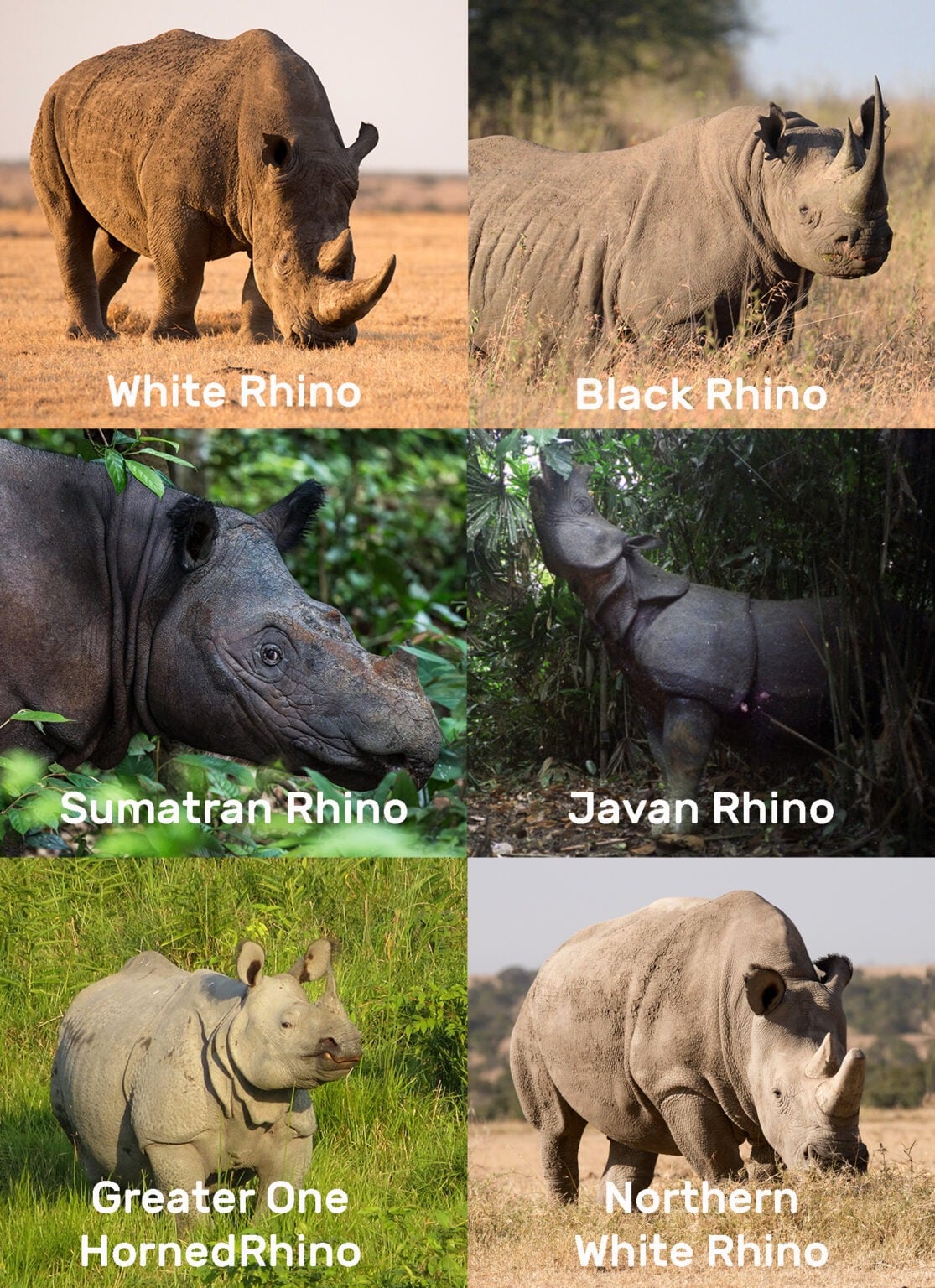
Helping Rhinos has a long-standing partnership with Ol Pejeta Conservancy in Kenya, a relationship that has grown over more than a decade into one of the organization’s most significant collaborations. Ol Pejeta is home to the world’s largest population of critically endangered eastern black rhino, and protecting those animals requires more than fences and ranger patrols.
It requires dogs.
“Anti-poaching dogs are an extremely effective tool when it comes to protecting rhinos and other iconic wildlife,” Helping Rhinos explains. The K9 unit at Ol Pejeta is a carefully composed team, not a single breed doing a single job. “Alongside their human handlers, Ol Pejeta’s dog unit is made up of specialist scent dogs, trackers, and attack dogs, who work seamlessly to form an incredibly successful anti-poaching team.”
Each type of dog brings a distinct capability. Scent dogs pick up human trails in conditions where rangers would struggle. Trackers follow and pursue. Attack dogs provide a physical deterrent. Together, with their handlers, they form something greater than the sum of their parts: a mobile, adaptive unit that can respond to threats in real time, across difficult terrain, at any hour.
Why Dogs Work Where Other Tools Fall Short
Technology has changed conservation in many ways. Drones, camera traps, and data systems all play a role. But there is something about the biology of a working dog that no piece of equipment has yet matched.
“Dogs are brilliant hunters and detectors,” Helping Rhinos notes. “They have tremendous stamina, a great sense of smell, and are extremely fast.” These are not abstract traits. In practice, they translate to capabilities that reshape what an anti-poaching team can do on the ground.
Consider the reach alone. “They can alert rangers to the presence of a poacher up to a kilometre away and find hidden arms and ammunition.” That early warning is the difference between interception and tragedy. And the advantage extends through the night. “With dogs, anti-poaching teams are now much better equipped to track and detect at night and can cover greater ground.”
Helping Rhinos puts it plainly: “There is no technology that works better than our canine friends.”
The K9 unit also provides a broader security benefit. Its presence protects not just rhinos but all wildlife across the conservancy, and it supports law enforcement responses to incidents in the surrounding communities. The dogs do not distinguish between protecting rhinos and protecting people. They work where they are needed.
Eight Years Without Losing a Rhino to Poaching
Numbers in conservation can be slippery. Population estimates shift. Patrol coverage is hard to quantify. But one figure connected to Ol Pejeta’s K9 unit is specific and striking.
“The K9 unit on Ol Pejeta has directly contributed to the conservancy’s record of eight consecutive years with zero rhinos lost to poaching,” Helping Rhinos states. That record does not belong to the dogs alone. It reflects the full system: trained handlers, rangers, veterinary support, habitat management, and years of sustained investment from Helping Rhinos and Ol Pejeta together.
But the dogs are a central part of what makes that system work. Their contribution to deterrence, detection, and pursuit is woven into the conservancy’s daily operations. Without them, the coverage gaps at night and across difficult terrain would create openings that poachers historically exploit.
What the eight-year record shows is not just the effectiveness of the K9 unit. It shows what is possible when a long-term partnership is built on shared goals, consistent funding, and honest communication. Helping Rhinos describes communication as the foundation of all its conservation relationships, and Ol Pejeta is the example that demonstrates what that kind of continuity can produce.
After the Poacher: How RhODIS Connects Horn to Rhino
Prevention is the priority. But poaching still occurs across the wider region, and when it does, the question becomes whether law enforcement can actually make a case. This is where DNA forensics enters.
“DNA profiling has become a key tool for law enforcement, largely through a system called RhODIS, the Rhino DNA Index System,” Helping Rhinos explains. The system works by building a database of individual rhino DNA, collected during routine veterinary procedures. “When a rhino is darted for a veterinary procedure or to be ear-notched for example, DNA samples are taken and added to RhODIS.”
The logic is straightforward, but the implications are significant. Every sample added to the index represents a rhino whose identity can now be confirmed from biological material, including horn.
When law enforcement seizes rhino horn, whether at a border crossing, in a vehicle, or at a processing site, RhODIS gives investigators a way to trace it back to its source. “This index of DNA means that if law enforcement seizes illicit rhino horn, they have the ability to link those horns back to the rhinos they were taken from, thereby strengthening cases and supporting convictions of poachers and traffickers.”
This is accountability built into the biology of the animal itself. A poacher who kills a rhino whose DNA is in the index leaves evidence that can follow the horn through multiple hands, across borders, and into courtrooms.
The value of the index grows with every sample added. Veterinary partners working with Helping Rhinos’ projects contribute to that database as part of their routine work with rhinos, ensuring that more animals are represented and more future prosecutions are possible.
Protection and Accountability, Together
The two approaches, dogs in the field and DNA in the lab, address different moments in the same problem. One works before a poaching attempt. The other works after. And the combination is what gives conservancies and law enforcement agencies a more complete set of tools.
Helping Rhinos’ three-pillar approach, protecting wildlife, preserving habitat, and providing for people, runs through both of these efforts. The K9 unit protects rhinos and benefits communities. RhODIS supports law enforcement and builds the evidentiary infrastructure that makes prosecution viable. Neither is a standalone fix. Both are part of a system designed to last.
Helping Rhinos continues to look for ways to expand its impact, including into new regions and new partnerships. The organization’s Rhino Strongholds initiative, focused on creating large, secure, connected landscapes where rhinos can live and reproduce without constant human intervention, depends on exactly this kind of layered protection: animals deterred from being poached, and poachers deterred by the knowledge that the evidence will follow them.
Supporters who want to be part of protecting rhinos on the ground can adopt the K9 pack at Ol Pejeta through Helping Rhinos. For more about the work, visit Helping Rhinos.
The dogs keep working through the night. The database keeps growing. And the rhinos at Ol Pejeta, for eight consecutive years, have made it through.