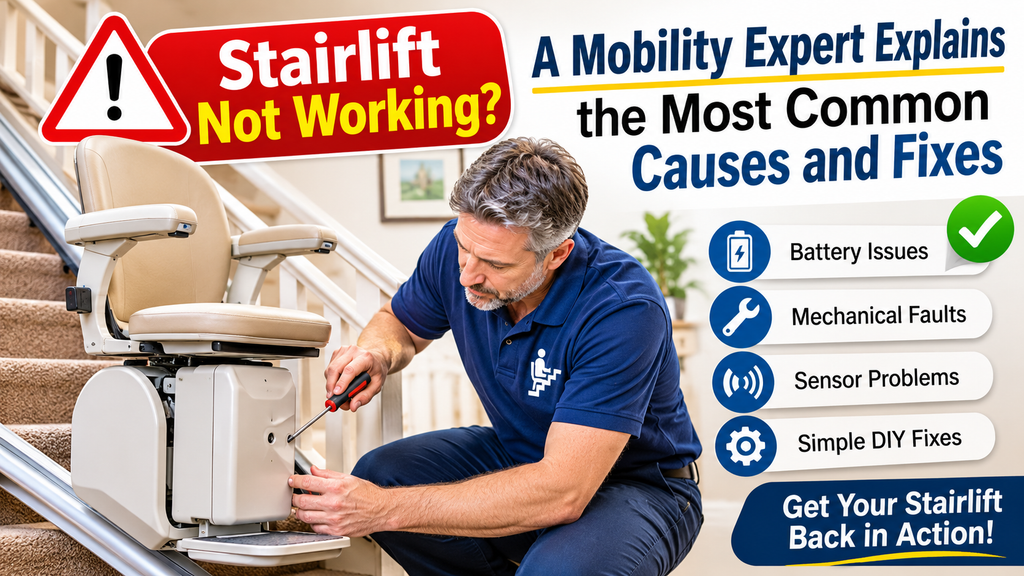
It is frustrating and disruptive when a stairlift suddenly stops working, particularly for people who depend on it to move between floors. A stairlift is often the key to maintaining independence at home. Whether it’s used multiple times a day or only when climbing the stairs becomes difficult, users need it to work safely and consistently.
Fortunately, many stairlift issues have straightforward causes. While some problems require professional repairs, others are fixable in just a few minutes with some basic checks. Understanding the most common reasons a stairlift may stop working will help you identify simple fixes, know when it’s safe to troubleshoot, and recognize when it’s time to call an expert.
Safety First: Never Override Safety Features
When a stairlift stops midway on the stairs, it is tempting to bypass the safety systems and attempt to move it manually. However, this creates significant risks.
Jeremiah Marquis is a stairlift specialist at Mobility Plus Colorado. Mobility Plus Colorado specializes in stairlift sales and rentals. Marquis advises, “Lifts that don’t have safety features might require you to override the wiring system, which is dangerous if you don’t know what you’re doing.” Instead, he recommends asking the manufacturer or a qualified technician for assistance before attempting to move the chair yourself.
Modern stairlifts are designed with multiple safety mechanisms to protect users. Attempting to bypass these systems increases the risk of injury or causes further damage to the equipment. According to the Electrical Safety Federation International, electrical hazards cause more than 400 electrocutions in the United States each year.
If someone is unable to safely exit the stairlift while it’s stopped, seek assistance rather than attempting repairs yourself.
Safety Sensors Are Being Triggered
Safety sensors are designed to protect users. However, they also prevent a stairlift from operating if they detect an obstruction or become dirty.
Modern stairlifts are equipped with numerous safety sensors designed to prevent accidents. These sensors stop the lift if they detect an obstruction on the stairs, rail, footrest, or around the carriage.
Sometimes the issue is as simple as a small object, loose rug, pet toy, or piece of debris blocking the lift’s path. Other times, dust buildup interferes with the sensors themselves.
Marquis says, “Your machine may not be functioning 100% due to dirty or dusty sensors. This can be solved simply by wiping or cleaning the sensors.”
Before assuming there’s a mechanical fault, carefully inspect the stairlift and surrounding area for anything that could be interfering with the safety system. Cleaning the sensors with a soft, dry cloth is sometimes all that’s needed to restore normal operation.
The Stairlift Isn’t Parked Correctly
A stairlift that isn’t fully parked at its charging point will stop working because the batteries haven’t recharged. Most modern stairlifts recharge their batteries whenever the chair is positioned correctly at the top or bottom of the rail. If it’s stopped slightly short of the charging contacts, the batteries will not recharge properly.
Even if the stairlift appears to be in the correct position, moving it a few inches until it clicks securely into place will solve the problem. Many models also display an indicator light or audible signal when they’re charging correctly.
If the batteries have become depleted because the lift wasn’t parked on its charger, allowing the unit to recharge will restore normal operation.
The Batteries Need Charging or Replacing
Because most residential stairlifts run on rechargeable batteries, battery health plays a significant role in reliability. Even though the lift plugs into household power, the batteries provide the energy needed to move the chair smoothly up and down the stairs.
Over time, rechargeable batteries naturally wear out. Older batteries struggle to hold a charge, causing slower operation, beeping alarms, or the lift stopping unexpectedly.
Power outages also temporarily drain the batteries if the lift is used repeatedly while electricity is unavailable.
If your stairlift is several years old and you’ve noticed performance gradually declining, replacing the batteries should solve the issue. Battery replacement should generally be carried out according to the manufacturer’s recommendations or by a qualified technician.
A Power Supply Problem Is Preventing Operation
Sometimes the issue isn’t with the stairlift itself but with the home’s electrical supply.
Check whether the lift is plugged in securely and whether the outlet is receiving power. A tripped circuit breaker or a switched-off power outlet interrupts battery charging, eventually causing the lift to stop operating.
If you’ve recently experienced a power outage, give the batteries time to recharge once electricity has been restored before assuming the lift requires repairs.
The Seat or Footrest Isn’t Locked Into Position
Built-in safety interlocks prevent a stairlift from moving unless key components are correctly positioned.
Most stairlifts include built-in safety interlocks that prevent movement unless the seat, armrests, footrest, and swivel seat are correctly positioned.
If the seat has been rotated to allow someone to safely get on or off at the top of the stairs, it usually needs to be locked back into its travel position before the lift will move again.
Similarly, folded footrests or armrests that haven’t been fully lowered prevent operation on certain models.
Taking a few moments to ensure every moving component is fully engaged often resolves the problem without any additional troubleshooting.
The Remote Control or Controls Aren’t Responding
If your stairlift controls aren’t responding, replacing your remote batteries is the first thing to try.
If your stairlift works from the onboard controls but not from the remote, the remote control likely needs new batteries.
Some wireless remotes also lose synchronization or experience interference, although this is less common. Replacing the batteries is an easy first step before contacting the manufacturer for further assistance.
If neither the remote nor the chair controls respond, calling a professional is the next step in diagnosing any larger electrical or mechanical issues.
Know When It’s Time to Call a Professional
Some stairlift problems should always be diagnosed and repaired by a qualified technician.
While cleaning sensors, checking the power supply, and ensuring the chair is correctly positioned are all reasonable first steps, some problems require professional servicing.
Persistent error codes, unusual noises, jerky movement, repeated stoppages, or electrical faults should all be inspected by a qualified technician. Continuing to use a malfunctioning stairlift compromises both reliability and safety.
As Marquis explains, “When the stairlift is correctly positioned, and the user has safely left the lift, you should call the manufacturer or retailer, as a malfunction could be a sign that the lift needs maintenance from a professional technician.”
Regular servicing not only identifies worn components before they fail but also keeps safety systems operating as intended. This extends the life of the stairlift and provides greater peace of mind.
Keeping Your Stairlift Running Reliably
Routine maintenance and prompt professional servicing keep your stairlift operating safely for years to come. Like any mobility equipment, stairlifts benefit from routine care and preventative maintenance. Keeping the rail clean, ensuring charging points remain unobstructed, wiping down safety sensors, and scheduling regular professional inspections reduces unexpected breakdowns.
Although many stairlift issues are minor, it’s important to remember that these devices are designed to transport people safely. If basic troubleshooting doesn’t resolve the problem, avoid attempting repairs beyond those recommended by the manufacturer. A qualified technician will diagnose the issue safely, restore reliable operation, and ensure your stairlift continues to provide dependable mobility support.