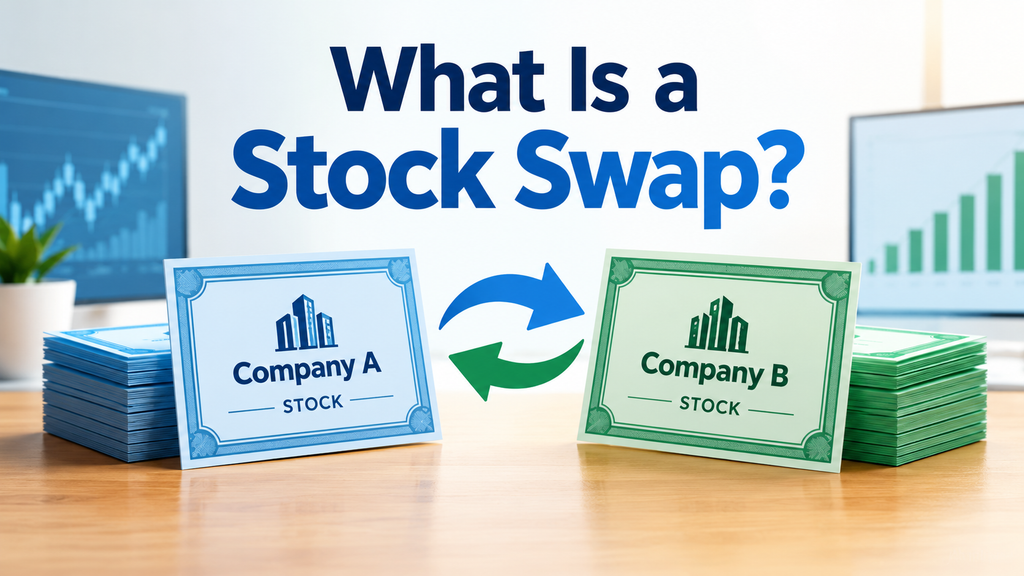
A stock swap is a corporate buyout where one company purchases another business by trading its own stock shares instead of paying cash. This transaction stops the need for massive cash payments during a business sale. Instead, the owners of the old company hand over their private shares. They instantly become new stock owners in the buying company.
Understanding the Mechanics of Stock-for-Stock Exchanges
The mechanics of a stock swap involve valuing both businesses, setting a trade rate, and issuing new shares to replace old stock ownership. This corporate transition switches out stock certificates. However, it leaves customer relationships, employee roles, and daily operational schedules untouched.
Deferring Taxes With Stock Mergers
The Internal Revenue Service (IRS) views non-cash business sales as corporate restructuring events rather than standard asset liquidations. Pablo Martell is the founder and CEO of Alpine Mar CPAs in Florida, and a transaction advisory services specialist. Martell notes that “when structured correctly, stock-for-stock mergers can qualify for tax deferral under IRS tax-free reorganization rules.” This federal classification prevents sellers from facing a tax bill on the day the deal closes.
Tracking Your New Share Cost Basis
Sellers preserve their equity by rolling the original tax basis of their old company directly into the new replacement equity. According to Martell, “shareholders postpone capital gains taxes until they sell the newly acquired stock.”
Because of this transition, business owners must track this historical asset value closely. This careful step helps them avoid massive financial surprises whenever they choose to sell their new shares.
Tax Classifications and IRS Regulations
The IRS tax rules classify stock swaps as tax-free reorganizations or taxable sales depending on the deal structure. Under Section 368 of the tax code, a deal must serve a real business purpose and maintain business continuity to skip instant taxes [§ 1.368-1(b)]. If a deal fails to meet these specific federal rules, the government taxes the trade like a normal cash sale.
Managing Cash Boot and Hybrid Deal Structures
A pure Type B stock swap permits absolutely no cash payments, forcing corporate buyers to use a Type A merger structure for mixed cash-and-stock deals. This rule is very strict under federal law. The IRS rules state that the purchase must happen only through voting stock. Even a tiny cash payment will completely destroy the tax-free status of the whole deal.
Buyers must use a blended Type A merger to give cash to sellers who want money right away. In this blended setup, the IRS calls the cash portion “boot.” Martell clarifies that “this hybrid structure uses a mix of cash and stock for consideration. Cash payments generate immediate tax liabilities, typically as capital gains.”
Balancing Cash Out With Future Growth
Founders balance cash payouts with future growth by taking some cash upfront while keeping some shares in the larger buying company. Keeping these extra shares lets owners build long-term value alongside the new parent business. This strategy allows business owners to lower their financial risks by taking some chips off the table without walking away from their brand completely.
Choosing a Type A or Type B Deal Structure
Corporate buyers choose a Type B reorganization for pure stock transactions or a Type A merger for mixed cash-and-stock deals. Buyers match the structure to their available capital and deal goals. A pure stock path keeps the transaction simple, while a blended path offers instant money to satisfy investors who want out.
To keep either choice tax-free, the transaction must pass a federal check called the continuity of interest rule. This IRS rule states that the sellers must keep a large ownership share in the new parent company. If a deal pays out too much cash and too little stock, the government completely cancels the tax benefits.
This is how your chosen deal structure affects your tax and equity positions.
| Transaction Feature | Pure Stock Swap (Type B) | Blended Merger (Type A) |
| Allowed Payment Mix | Voting stock only | Stock and cash mix |
| Immediate Tax Due | Zero (deferred) | Due on cash portion |
| If Rules Are Broken | Entire deal becomes taxable | Entire deal becomes taxable |
| Valuation Risk | High | Balanced |
Key Benefits for Small and Mid-Sized Businesses
The main benefit of a stock swap for a business is the ability to buy another company without using up all its cash. By skipping heavy bank loans, the business stays safe from rising interest rates and avoids deep debt. This financial freedom allows the new, combined company to immediately use its money to hire workers or buy new equipment.
Solving the Small Business Liquidity Trap
Sellers solve the small business cash-out trap by trading their hard-to-sell private stock for shares in a public corporation. Large corporate buyers hand out public stock that the sellers are able to easily turn into cash on the open market. This switch allows founders to protect their lifetime savings and fund their retirement without keeping all their money tied up in a single company.
Strategic Risks and Valuation Challenges
The primary risk of a stock swap transaction is shifting stock prices, which lowers the payout if the buyer’s stock drops before closing. Public stock prices change every single day based on overall economic shifts and company earnings reports. If the buyer’s stock value plunges right before the deal finishes, the seller walks away with much less money than they originally expected.
How to Protect Against Share Drops
Sellers protect against share drops by putting safety rules like price collars and walk-away rights directly into the final sales contract. These legal steps protect the seller’s money during the waiting period between signing the deal and officially closing it.
Corporate legal teams use four main tools to secure the final payout:
- Price Collars: This rule sets a safe boundary for the buyer’s stock price. If the stock price stays inside this boundary, the original trade deal stays the same.
- Adjustment Triggers: If the buyer’s stock falls below a set floor price, this rule forces the buyer to give the seller extra shares or cash to make up the difference.
- Walk-Away Rights: This rule lets the seller cancel the whole business deal without any penalty if the buyer’s stock drops past an agreed breaking point.
- Fixed Value Agreements: This setup links the final payment to a set dollar amount on closing day instead of a fixed number of shares.
Understanding the Dangers of Share Dilution
Share dilution happens when a buyer creates new stock to pay for a business, which lowers how much of the company the original investors own. Making these extra shares increases the total number of stock pieces available on the market. As a result, each older share represents a smaller slice of the whole company and carries less voting power.
Checking the Smaller Company’s Records
Buying teams must check past financial records and active legal fights during a deep background check to avoid taking on hidden money problems. Financial experts inspect old tax forms, lawsuits, and customer contracts during this review period. This thorough check confirms that the smaller business is healthy enough to match the value of the new stock shares.
Smart Planning for Corporate Stock Swaps
A corporate stock swap allows companies to combine forces quickly without draining their available cash. Buyers keep their money to build up business teams, while sellers successfully shift private company wealth into easy-to-sell public stock. This smooth transition protects everyday work from sudden disruptions.
Winning long-term value from these deals relies on careful planning from the very start. Business owners must look at the big picture and plan out their next steps with trusted experts. By choosing the right setup, both companies will grow together and protect their hard work for years to come.