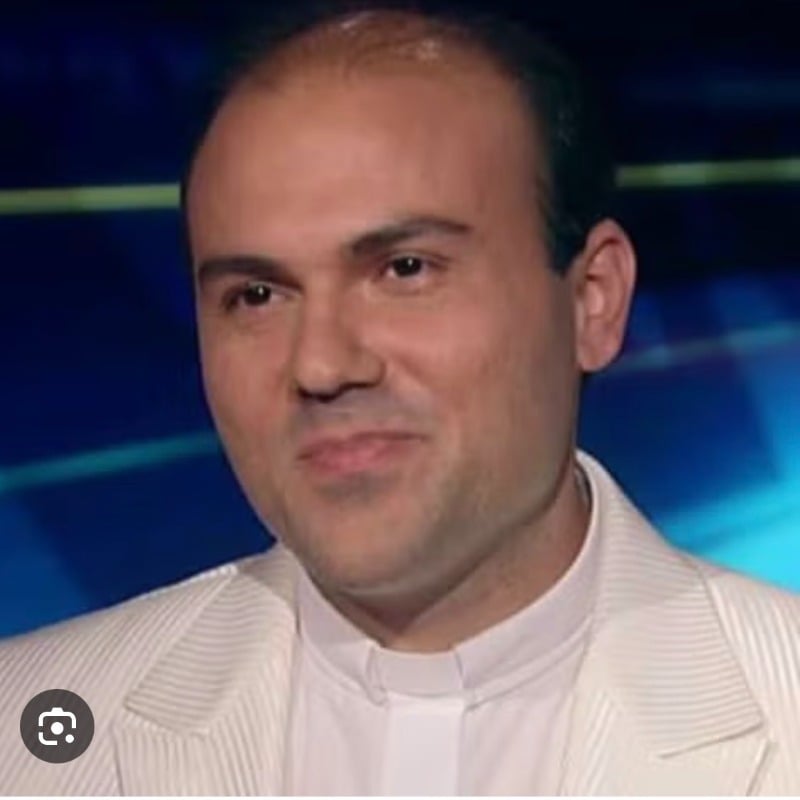
Long before his name became a rallying cry for churches around the world, Saeed Abedini was trying to build a place for children who had nowhere else to go.
The project was an orphanage in Rasht, a city in northern Iran, and Abedini pursued it through official channels. That effort led to his arrest. In January 2013, an Iranian court sentenced the pastor to eight years in prison. The court accused him of undermining the government by building a network of Christian house churches and drawing young Iranians away from Islam.
By then, Abedini had already lived a life most believers in the West would struggle to imagine. He was raised Muslim and began questioning that faith as a teenager. He converted to Christianity at 20, which made him guilty of a capital offense under Sharia law. He shared his new faith anyway. In the years that followed, he helped plant dozens of house churches, often while facing threats and intimidation.
He spent roughly three and a half years in prison. News of his imprisonment spread far beyond Iran. Believers in the United States, Canada and dozens of other nations prayed, petitioned and advocated for his freedom. In January 2016, he was released as part of a prisoner exchange between Iran and the United States.
One decade later, Saeed Abedini, now a U.S. citizen, no longer stands at the center of a global prayer campaign. He works on behalf of people facing the kind of danger he once faced.
That work grows out of a commitment he made more than two decades ago. “I dedicated my life to Jesus 26 years ago, when the Assemblies of God church of Iran asked me to sign a paper confirming I had a full-time calling from the Lord,” Abedini said. “Since then, night and day, I have been dedicated to the Lord’s call. I have never received a salary from any church. It was a supernatural step of faith, and the Lord has worked with signs and wonders and untold provision.”
His commission from Jesus still drives him. “He told me, ‘Saeed, I am coming back soon. Go and reach people with my gospel,'” Abedini said. “I have followed that command until today.”
Abedini still speaks to Christian and secular audiences about faith, freedom and the defense of persecuted Christians. The work that defines this season of his life, though, happens offstage. It is the urgent, often unseen effort to help believers in danger find protection, legal standing and a safe place to land.
Saeed Abedini Connects At-Risk Believers With the Channels That Help Them Escape
Persecution rarely arrives all at once. It builds over time: a warning from a neighbor, a summons from local authorities, a family that turns away. By the time a believer decides to leave, the options can narrow quickly.
That is where Saeed Abedini has chosen to stand.
“We help people whose lives are in danger because of their faith,” Abedini said. “I’ve worked with the U.S. government’s religious freedom office to help people facing life-threatening danger escape persecution, and to get legal protection and safe passage to countries where they’ll be safe.”
In these cases, Abedini works as a bridge rather than a caseworker who carries each file from beginning to end. Decades of ministry travel have built relationships with pastors, church leaders and believers in many countries, and word of someone in danger often reaches him through those relationships.
He then works to connect that person with the religious freedom channels, legal resources and international partners equipped to take the next step.
His history gives that bridge its strength. Abedini knows what it means to worship in secret, to be questioned about his faith and to sit in a cell not knowing if release will ever come. His own experience with persecution shapes the advocacy he does today, and it gives him a credibility no training program can supply. He says a frightened believer trusts a voice more readily when it belongs to someone who survived what they fear most.
Why Refugees and Vulnerable Children Remain at the Heart of Saeed Abedini’s Advocacy
The orphanage project in Rasht showed early on where Abedini’s attention goes. His concern for refugees and vulnerable children still runs through his work, and he speaks bluntly about why.
“No one cares, and international law is against them, and they’ve been used and abused a lot, but no media covers it, no one cares,” Abedini said. “It’s an upside-down world. That’s why I’ve traveled to so many cities — what you see with your own eyes is completely different from what the media, or universities, or culture tends to say about them.”
By his own count, that conviction has carried him to more than 1,000 cities. He spends time in the places where displaced families and at-risk children actually live instead of relying on secondhand reports.
The global numbers show why he feels the urgency. Open Doors’ 2026 World Watch List counted more than 388 million Christians living under high levels of persecution and discrimination, roughly one in seven believers worldwide and over 8 million more than the year before. Children carry a heavy share of that burden, with about 110 million of those affected under age 15. The same research recorded 4,849 Christians killed for their faith during the reporting period, an average of 13 each day. The top 10 countries are: North Korea, Somalia, Yemen, Sudan, Eritrea, Syria, Nigeria, Pakistan, Libya, and Iran. In 2026, all 15 countries in the “extreme” category scored between 85 and 97 out of 100 on Open Doors’ persecution measurement scale.
The displacement picture is just as sobering. The United Nations refugee agency reported that 117.8 million people worldwide had been forcibly displaced by the end of 2025 because of persecution, conflict, violence and human rights violations. Children make up 39% of that displaced population while representing only 29% of the global population.
Those figures describe the terrain Saeed Abedini works in. His attention stays on the individuals inside them: the believer who cannot go home, the family that fled with nothing and the child with no one watching out for them.
A Decade After His Release, an Ambassador of Peace Keeps Moving Toward the Next Person in Danger
Alongside his work with religious freedom channels in the United States, Saeed Abedini has carried his advocacy onto the international stage.
“I also work with the United Nations as an ambassador of peace for persecuted Christians,” Abedini said.
The role gives him another platform to raise the plight of believers who cannot safely speak for themselves. In international humanitarian settings, Abedini keeps persecuted Christians on the agenda, shares what he has seen on the ground and pushes for their protection. It extends the same work he does case by case, on a wider scale.
The progress he wants to see begins with attention. Stronger legal protections, faster pathways to safety and churches willing to stand with believers in hostile nations would all make a difference. In his view, though, none of that moves until people decide to look. His frustration that the media overlooks persecuted refugees and children is also his assignment: tell the story until more people see it, then help the people inside it reach safety.
Abedini’s own story once reached millions of people, and that global attention became part of his path to freedom. Today he works so that people facing persecution without that spotlight still have someone who knows their names and knows which doors to knock on.
More than 13 years after his sentencing, Saeed Abedini is still doing the work that first put him in a prison cell, and the vision behind it has not changed.
Persecution has followed believers since the church’s first days. Stephen was stoned in Jerusalem, and the Christians who scattered afterward carried the gospel into every town they reached. Paul wrote letters from prison. John was exiled to Patmos because of the word of God. More than 2,000 years after the crucifixion and resurrection of Jesus, followers of Christ are still threatened, imprisoned and driven from their homes because of their faith.
Abedini knows that cost firsthand. He also knows the Great Commission has never been put on hold. Before his ascension, Jesus sent his disciples to make disciples of all nations, and persecution has never canceled that charge.
“My vision is to preach the whole gospel to the whole world with whole passion,” Abedini said.
The orphanage in Rasht was meant to shelter children with nowhere else to go. Abedini is still building that shelter today, though now it has no walls.