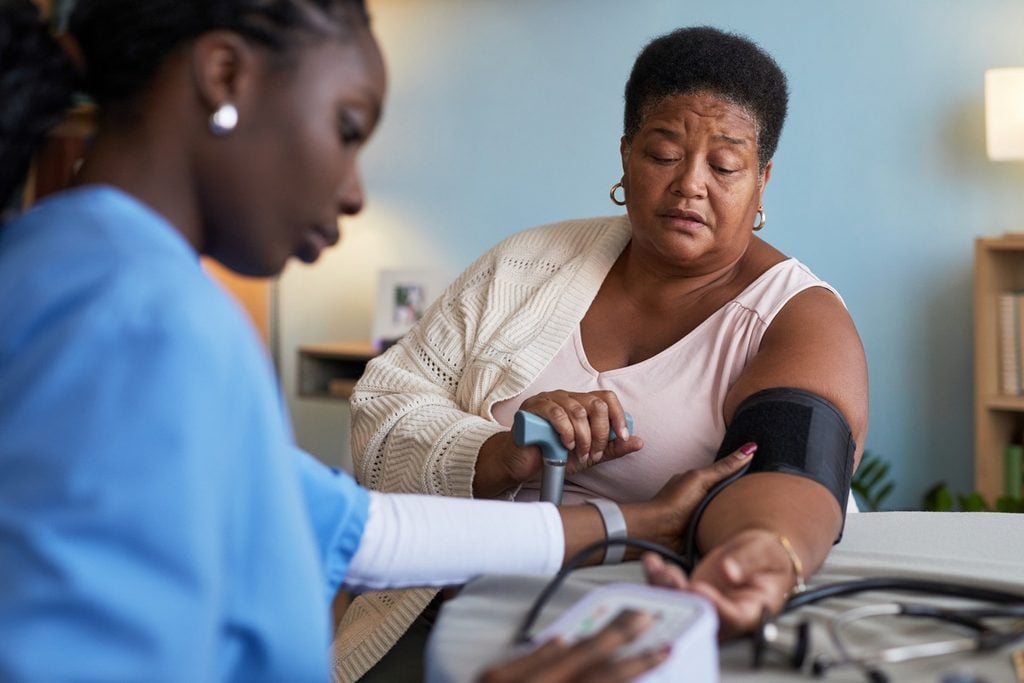
Mariejo Constant approaches public health from a premise that has become increasingly important to understanding community wellness: health outcomes are shaped by more than clinical care. A person’s ability to live a healthy life can depend on where they live, what resources they can access, the education and information available to them, their financial circumstances, and whether health systems understand the communities they serve. For Constant, these interconnected factors make health equity, preventive medicine, epidemiology, and the social determinants of health essential areas of public health research and education.
Her academic and research background in public health has reinforced an interest in improving quality of life for underserved populations. Through Master of Public Health training in epidemiology and a Ph.D. in Public Health, Constant developed a perspective that emphasizes evidence-based interventions, community engagement, interdisciplinary collaboration, and culturally sensitive strategies. That perspective recognizes that meaningful improvements in health require both an understanding of disease patterns and a clear view of the social conditions that influence them.
Understanding Health Beyond the Doctor’s Office
The social determinants of health describe the conditions surrounding people as they live, learn, work, and participate in their communities. These conditions can have significant implications for health long before someone enters a healthcare setting. Income, education, housing, transportation, environmental conditions, food access, and health literacy can all affect a person’s opportunities to maintain wellness and prevent disease.
Mariejo Constant’s interest in these determinants reflects a public health perspective rooted in equity. Socioeconomic status, for example, can influence whether a family can afford nutritious food, reliable transportation, safe housing, or routine healthcare. Education can affect employment opportunities as well as a person’s ability to find, understand, and use health information. Environmental conditions can expose some communities to risks that others encounter less frequently.
Transportation illustrates how seemingly nonmedical circumstances can become health issues. A community may technically have healthcare services available, but those services are less accessible when residents lack reliable transportation or must travel significant distances to reach them. Similar challenges arise when appointments conflict with work responsibilities, language differences make health information difficult to understand, or insurance limitations create uncertainty about the affordability of care.
Looking at health through this broader lens shifts attention from individual behavior alone toward the circumstances in which choices are made. Public health can then ask a more useful set of questions: What barriers prevent people from acting on health information? Which populations experience disproportionate risks? Where are resources difficult to access? What interventions could reduce those gaps?
Why Prevention Matters
Preventive medicine and disease prevention are central to Constant’s public health interests because they focus attention on reducing risks before poor outcomes become more difficult to address. At the population level, prevention can include public health education, screening initiatives, improved access to services, community outreach, and programs designed around known risk factors.
The principle is straightforward: prevention begins with education, access, and trust. Information is most useful when people can understand it, connect it to their circumstances, and realistically act on it. Access matters because awareness of a health need does not automatically provide the resources to address that need. Trust matters because communities are more likely to engage with public health programs when communication is respectful, relevant, and responsive to their experiences.
Epidemiology adds an important analytical dimension to prevention. By examining patterns of disease, risk, and health outcomes across populations, public health professionals can identify disparities and better understand where interventions may be needed. Data can reveal that a health problem is not distributed evenly, but interpreting those patterns also requires attention to socioeconomic and environmental context.
For Constant, the value of evidence-based public health lies in connecting reliable information with practical action. Data should help communities and public health organizations determine where needs exist, how resources might be directed, and whether interventions are producing meaningful improvements.
Mariejo Constant and the Barriers Facing Underserved Communities
Health inequities often emerge through multiple barriers operating at the same time. Underserved communities may have limited access to quality medical care because of geography, cost, insurance challenges, or shortages of providers. Even when services exist, transportation problems, limited health education, language differences, and a lack of culturally competent care can make those resources harder to use effectively.
These barriers are rarely isolated. A person living far from available services may also have limited transportation. Someone facing financial constraints may delay seeking care while also having fewer opportunities to access preventive resources. A language barrier can compound difficulties understanding insurance requirements or health information. Each additional obstacle can increase the distance between having a service theoretically available and being able to benefit from it in practice.
Health literacy is particularly important within this discussion. Public health education is not simply a matter of distributing more information. Effective communication considers whether information is understandable, culturally appropriate, accessible, and relevant to the audience receiving it. Helping communities understand the factors that influence wellness can strengthen their ability to make informed decisions, but education works best when structural barriers are addressed alongside it.
Culturally sensitive strategies also recognize that communities are not interchangeable. Beliefs, experiences, languages, social networks, and relationships with institutions can influence how health information is received. Community engagement allows interventions to reflect those realities rather than assuming that a single approach will work equally well everywhere.
Health Equity as a Public Health Value
At the center of Constant’s outlook is a clear understanding of health equity: everyone should have a fair and just opportunity to achieve their highest level of health, regardless of background, income, location, or social circumstances.
Equity does not mean assuming that every population has identical needs. It means recognizing differences in barriers, risks, and available resources, then developing responses that address those differences thoughtfully. A rural community facing geographic isolation may require a different strategy from an urban neighborhood struggling with affordability or environmental risks. A population experiencing language barriers may benefit from different forms of outreach than one facing a shortage of nearby services.
This distinction matters because equal availability does not always produce equitable access. Offering the same resource to everyone can still leave substantial disparities when some groups face greater obstacles to using it. Public health strategies therefore need to consider not only what services exist, but who can realistically reach them, understand them, afford them, and trust them.
Constant’s MPH and doctoral training helped shape this approach by bringing together epidemiology, community health, research, and the study of evidence-based interventions. Interdisciplinary collaboration is especially relevant because the factors influencing health extend across healthcare, education, housing, transportation, environmental conditions, economic opportunity, and public policy.
Community-Based Solutions and Practical Impact
Turning health equity from a principle into measurable progress requires interventions informed by both evidence and community needs. Community health needs assessments can help identify local priorities, gaps in services, population-specific concerns, and existing resources. Epidemiological data can provide another layer of understanding by showing where health burdens are concentrated and how patterns change over time.
The strongest strategies can combine those findings with meaningful community engagement. Residents, educators, public health professionals, community organizations, researchers, and other stakeholders can contribute different forms of knowledge. Data may identify a disparity, while community members can help explain the practical conditions behind it.
Targeted policies and community-based interventions can then focus resources where barriers are most significant. Public health education can strengthen health literacy. Culturally sensitive communication can make information more relevant and accessible. Needs assessments can help organizations avoid relying on assumptions. Evaluation can determine whether a program is achieving its intended outcomes and provide evidence for refining future efforts.
This is where Constant’s emphasis on bridging gaps in care through education and community engagement becomes particularly practical. Sustainable public health programs are not defined only by ambitious goals. They require a clear understanding of the population being served, credible evidence, measurable objectives, collaboration, and the flexibility to respond to community realities.
The broader goal is creating practical, sustainable pathways to better health. That means recognizing that disease prevention and community wellness are connected to conditions extending well beyond healthcare facilities. Food security, income, education, transportation, environmental safety, access to care, and culturally appropriate support all influence whether individuals and families have genuine opportunities to thrive.
Mariejo Constant’s public health perspective ultimately places prevention and equity within the same framework. Preventing disease is more effective when people have access to resources that support healthy lives, while health equity becomes more achievable when interventions address the barriers that place some populations at greater risk.
Building healthier communities therefore requires more than responding to illness after it occurs. It requires understanding patterns of risk, strengthening health literacy, listening to communities, improving access, and using evidence to guide decisions. Through public health research and education focused on these priorities, the work of prevention can become a broader effort to expand opportunity, strengthen community wellness, and improve quality of life for underserved populations.