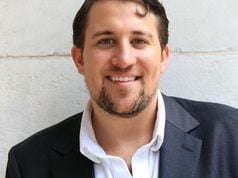
Angela Jimenez grew up knowing exactly what it meant to need stable housing. She was raised in Public Housing in High Point, North Carolina, navigating the kind of stigma that trails low-income families quietly but persistently. Other kids absorbed those messages. Jimenez made a different decision. She decided her address would not define her ceiling, and that decision is the engine behind everything she has built since.
“I think of the mom who brings us her daughter’s college acceptance letter, or the child who finally feels safe enough to play outside,” she says. “That’s what keeps me grounded and determined.” It is not an abstract sentiment. She has been that child. She knows what that safety means, and she knows what its absence costs.
Today, Angela Jimenez leads the Housing Authority of the City of High Point as its CEO, the first woman to hold the position in the agency’s more than 80-year history. Under her housing authority leadership, HPHA has grown from a provider of shelter into a structured platform for economic mobility, built on the conviction that affordable housing is not the end of someone’s story. It is, when done right, the beginning.
HPHA was chartered in 1940 to provide decent, safe and sanitary housing for low-income residents. That mandate still holds. But HPHA today administers 900 Public Housing, 101 Section 8 New Construction and 24 Permanent Supportive Housing Program units, and 1,872 Section 8 vouchers, and and a suite of programs designed to move families not just into homes, but toward financial independence and homeownership opportunities they can sustain long after they leave assisted housing behind.
From Public Housing Participant to Housing Authority of the City of High Point CEO
Before Angela Jimenez became a CEO, she was a soldier. After earning her high school diploma in Gainesville, Florida, she enlisted in the U.S. Army, a choice that instilled discipline, mission orientation, and resilience that would later define her approach to public service. She came back with something no credential can teach: that structure and purpose, applied consistently, produce results that look impossible from the outside.
Prior to the military, she built her academic foundation at Brookstone College, after the military she then attended High Point University, where she earned both a Bachelor of Science and a Master of Business Administration. The professional designations followed: HUD programs including Public Housing management and the Housing Choice Voucher Program, Tax Credits, Mixed Finance, Assisted Housing Management, Housing Development Finance Professional, North Carolina Real Estate Broker in Charge, Certified Property Manager, and more. Each one deliberate. Each one earned.
Angela Jimenez joined HPHA in 2003, worked through multiple roles, and rose to Chief Operating Officer. She stepped away briefly to lead and remove from HUD’s Receivership the Rockingham Housing Authority in North Carolina, then returned to HPHA in November 2010 as CEO. Her ascent mirrors the arc the agency’s own self-sufficiency programs are designed to produce. She lived the model before she ran it.
Her recognition reflects that authority. She is a 2009 Business Woman Extraordinaire of High Point, a 2010 Women Pioneers of the Triad honoree, a 2010 Triad Movers and Shakers recipient, and a 2012 Carl Chavis YMCA Minority Achievers Corporate Executive. She served on the Salvation Army Advisory Board, the United Way of Greater High Point, the City of High Point Human Relations Commission, the SERC-NAHRO Legislative Committee, and others. None of it came from distance. It came from staying close to the problem.
Financial Education, Workforce Development and HPHA’s Community Development Mission
The Housing Authority of the City of High Point operates on a premise most agencies acknowledge but few fully build around: a roof is necessary, not sufficient. Real community development, in Jimenez’s opinion, begins with stable housing and then asks what comes next. HPHA’s answer is a layered system of financial education, workforce development, and participant empowerment that treats each family’s potential as the actual unit of measure.
The Family Self-Sufficiency Program connects participants to employment counseling, credit repair, budgeting guidance, and homeownership preparation. The Comprehensive Housing Counseling and Homeownership Program provides the financial literacy infrastructure to make that transition lasting. These are not peripheral offerings. They are the agency’s theory of change made operational.
For elderly and disabled residents, the Senior Programs delivers wraparound support that preserves independent living. For youth, HPHA runs tutoring, summer programming, athletics, and financial literacy education. Project SOAR targets Public Housing youth between 15 and 20 with individualized help on FAFSA completion, college readiness, and post-acceptance support. It understands the difference between getting a student to apply and getting them to actually go.
“I think we’ll see a deeper integration of services, legal, educational, and financial, under single umbrellas of support,” Jimenez says. “Silos are breaking down, and we’re finally understanding that stability in one area like housing affects every other.” At HPHA, that integration is not a vision statement. It’s the current operating structure.
The Subsidiary Network Behind Participant Empowerment and Economic Mobility
HPHA doesn’t do this alone. The agency operates three subsidiaries that extend its reach into territory a traditional Public Housing authority can’t easily enter.
Low Income Housing Opportunities, Inc. develops and manages additional affordable units, expanding capacity beyond the core Public Housing portfolio. Empowering Lives and Building Foundations, Inc. runs the human-side work: job training, youth mentorship, financial literacy, and wraparound services for residents in HPHA’s self-sufficiency programs. High Point Economic Opportunities, Inc. is a for-profit entity built to acquire, develop, and hold title to affordable housing property, enabling mixed-income development that draws private capital alongside public investment.
“Our subsidiaries allow HPHA to go beyond traditional housing and meet participants where they are, economically, educationally, and personally,” Jimenez says. “These entities form the infrastructure for a holistic support system that addresses not just where our participants live, but how they thrive.”
The Upward Mobility Program anchors that ecosystem. It gives participants goal-setting frameworks, matched savings initiatives, employer referrals, and educational placement structured as a launch pad, not a permanent subsidy. HPHA also administers the Public Housing Capital Fund Program and has leveraged Tax Credits and grants to replace outdated infrastructure with modernized, mixed-income communities. Not cosmetic renovations. Investments designed to change what a neighborhood means for the people inside it.
Legacy Ridge, High Point Affordable Housing and the Housing Choice Voucher Program in Practice
Ask Jimenez to name the moment that stays with her, and she doesn’t hesitate. “Legacy Ridge will always be my mic drop moment,” she says. “Standing on the grounds where Daniel Brooks Homes once stood, seeing joy return to that space, was more than a project; it was a promise fulfilled.”
Legacy Ridge replaced deteriorated infrastructure on the former Daniel Brooks Homes site with a mixed-income, energy-efficient community that drew private investment and demonstrated what High Point affordable housing can look like when dignity drives the design. It is the clearest physical argument HPHA has made: the families it serves deserve housing that reflects aspiration, not apology.
On the voucher side, the Housing Choice Voucher Program connects more than 1,800 low-income households to private market housing. HPHA manages that portfolio through data-driven waitlist processes, mobility counseling near stronger schools and job corridors, language access services, and a landlord outreach program that includes dedicated liaisons, expedited inspections, and damage mitigation funds. The goal isn’t just placement. It’s placement that opens something. HPHA measures performance by where families land and whether those neighborhoods expand what’s possible for them.
What Angela Jimenez Believes and Where She Is Taking HPHA
There is a credibility that comes only from having lived the thing you now lead. Jimenez carries it into every conversation about Public Housing, affordable housing policy, and community development.
“We’re constantly up against systemic misconceptions, like the belief that Public Housing is the end of the road,” she says. “That myth limits funding, support, and even hope. At HPHA, we fight that every day.” The fight looks like Legacy Ridge. Project SOAR. A Family Self-Sufficiency participant buying a house. The mom walked in with her daughter’s acceptance letter.
Her guiding principle, drawn from Maya Angelou, is simple and demanding in equal measure: “When you know better, do better.” She holds herself and her team to it. The work is never finished. That’s exactly how she intends to run it.
“I’m excited by the growing national momentum around housing as a human right,” she says. “That language is no longer radical. It’s becoming part of policy conversations, and that shift means we can begin reimagining housing not just as a unit of shelter, but as a platform for equity, health, and upward mobility.”
HPHA’s mission is to provide eligible families and individuals with adequate affordable housing, economic advancement, and homeownership opportunities in a safe environment, without discrimination. Housing Authority of the City of High Point Angela Jimenez treats HPHA’s mission as boilerplate, as a standard she is accountable to every day. The scholarship earned, the house purchased, the child who finally feels safe: those are her metrics. And she is nowhere near done collecting them.