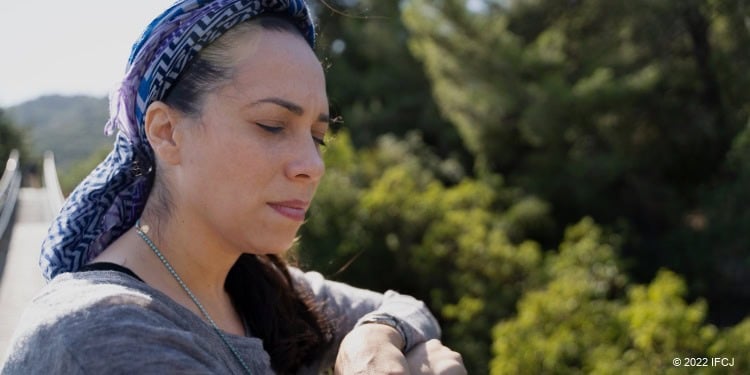
Yael Eckstein, President and Global CEO of the International Fellowship of Christians and Jews (IFCJ or The Fellowship), has spent her career building bridges between faith communities while leading one of the world’s most influential humanitarian organizations serving Israel and Jewish communities globally.
Founded in 1983 by Rabbi Yechiel Eckstein, IFCJ was created to promote understanding and cooperation between Christians and Jews and to provide humanitarian aid to the people of Israel. Over four decades, The Fellowship has grown into a global philanthropic force, supporting vulnerable populations through food programs, security initiatives, emergency aid and community support services. Following her father’s passing in 2019, Eckstein assumed leadership of the organization, continuing its mission while guiding new initiatives during times of global crisis, including emergency funding during the COVID-19 pandemic and humanitarian relief efforts for Jewish communities affected by the wars.
Under Eckstein’s leadership, IFCJ continues to strengthen interfaith relationships while addressing urgent needs on the ground in Israel and beyond. Known for her thoughtful voice on faith, service and leadership, Eckstein also hosts conversations that explore the intersection of calling, purpose and everyday life.
In a recent episode of her podcast, Nourish Your Biblical Roots, Eckstein welcomed Emmy Award-winning broadcast journalist Paula Faris. The duo had a candid discussion on motherhood, burnout, workplace equity and the evolving role of women in leadership.
Faris spent nearly a decade at ABC News, where she co-anchored “Good Morning America Weekend,” co-hosted “The View,” and reported on faith and culture. At the height of her career, she stepped away from daily broadcasting after experiencing burnout, later chronicling her journey in her bestselling book “Called Out: Why I Traded Two Dream Jobs for a Life of True Calling.”
Today, Faris is the founder of CARRY Media, an organization dedicated to supporting working mothers and amplifying their voices. She is also the author of “You Don’t Have to Carry It All: Ditch the Mom Guilt and Find a Better Way Forward” and “Who Do You Want to Be When You Grow Up?” Her work focuses on helping women navigate career, family, and calling with greater support and purpose.
In this edited Q&A, Eckstein and Faris reflect on their personal journeys, the challenges facing working mothers and why they believe supporting families is essential to building stronger communities.
A Conversation Between Eckstein and Faris: Nourish Your Biblical Roots Podcast
Yael Eckstein: You’ve done everything with such passion, which is why you’ve been successful in so many areas. Now you’re focusing on CARRY Media. Can you tell us about the journey of how you got there and why you felt this was your calling at this point in your life?
Paula Faris: I think we’re called to different things in different seasons. I was in broadcasting for more than 20 years, and I was faced with a decision. Do I take the safe route and take another job in television news, which was expected, or do I go for this thing that’s been burning in my spirit for a really long time, which is advocating for mothers in the workplace?
I’m a mother of three. I’ve always worked, and I’ve always felt that tension being a working mom, just not feeling valued. Motherhood is often scrutinized and punished instead of celebrated. We carry tremendous amounts of mom guilt. We’re burned out, and we often feel like we’re never quite nailing it.
After the birth of my third child, I returned to work at “Good Morning America.” On my first day back from maternity leave, I got an email from an executive that said, “Not your best look.” It was my first day back, and I already wasn’t feeling great about myself.
I responded and said, “It’s my first day back from maternity leave. If you could give me a little grace, that would be appreciated.”
At first I was hurt, and then I got really angry. Why is motherhood not celebrated? I had just furthered society, yet I was held to unrealistic standards. That moment lit a fire, and combined with hearing hundreds of stories from other mothers, it set me on this journey to change the game for working moms.
That’s so relatable no matter what profession you’re in. Going back to work after you give birth and feeling like you’re not doing good enough, then someone makes a comment that throws you off. You have to decide, am I going to accept this or stand up for myself and ask for grace?
Paula Faris: Absolutely. There’s not a lot of support for motherhood in the United States. We’re scrutinized more, paid less and often undervalued. I don’t think you have to have children to fulfill your calling as a woman, but I do think motherhood is one of the highest callings. If we don’t have children, we don’t have a society. That’s just reality. So celebrate us. Don’t punish us for doing something that benefits society.
I’m wondering, what was behind the name CARRY?
Paula Faris: Going back to that moment where I had these two divergent paths, once I decided to go for it, I was sitting in my living room and the name just came to me. I didn’t hire a big branding firm.
We carry babies, but we also want to carry women through important moments in their lives. I’m a believer, and the Bible talks about carrying one another’s burdens.
CARRY is not a faith-based organization, and we’re not politically affiliated. We’re united in the belief that mothers need support. It started as a placeholder, and it just stuck.
Living in Israel, I’ve seen how motherhood breaks down barriers. When you’re in a birthing unit or pushing a stroller in the park, suddenly you’re just mothers who want the best for your children. That common experience brings people together beyond politics or religion.
Paula Faris: Motherhood is the common denominator. I really believe many issues we face are tied to how we value families and how we treat mothers in the workplace. We need to unite to give mothers the support they deserve.
When I hear you speak, it’s so relatable. Can you share another hard situation you experienced while juggling it all? And who were the helpers in your life?
Paula Faris: Many of the helpers in my life have been male advocates, and that’s why I don’t think we can change the game for working moms without men. They’re part of the solution. One particularly hurtful time was when I discovered a significant gender pay disparity. I was doing the same job but making significantly less than my male counterparts.
It was actually the men around me, my co-anchors and my agent, who advocated for me and encouraged me to speak up. The gender pay gap is real, especially for mothers. Once we have children, we’re often seen as less viable leaders, while fathers are seen as more valuable and often paid more.
Seventy percent of mothers in America will at some point be the primary breadwinner. If we continue to pay mothers less, we perpetuate cycles of poverty.
I’m blessed with a supportive husband who stayed home with our children for years, and it wasn’t always celebrated. People would say, “Wow, your husband helps with laundry,” and he would say, “We split things around here.” The more we normalize men being involved at home, the more equality we can bring.
Paula Faris: I completely agree. We have to invite men into the conversation. Men are also navigating societal expectations that their only job is to provide financially. One of the greatest ways men can advocate is by taking paternity leave. It levels the playing field and shows that parenting is a partnership from the beginning.
A Conversation Rooted in Calling and Compassion
As their conversation draws to a close, the shared sense of purpose between Yael Eckstein and Paula Faris is unmistakable — rooted in faith, family and a deep commitment to serving others. Both women speak openly about the reality that while motherhood can be exhausting, it is also profoundly unifying. As Faris put it during the discussion, “We’re all tired, we’re all juggling, we’re all a little fried and burned out, but we’re all in it together,” a reminder that solidarity among women can be a powerful force for change.
Eckstein reflected on how motherhood transcends cultural and religious divides, noting that when mothers connect, “suddenly you’re just human, you just want the best for your children.” That shared humanity sits at the heart of both IFCJ’s mission and Faris’ advocacy work.
“Parenthood changes us,” Faris shared. “We become more empathetic, efficient and courageous. Mothers bring intrinsic value and perspective. We need to be at decision-making tables, in boardrooms and in leadership. Companies led by women are often more profitable. If you put mothers at the helm, I truly believe we can change the world.”
By: Chris Bates