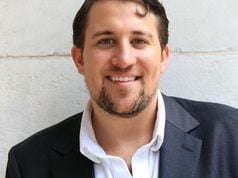
High-performance environments rarely operate on instinct alone. They are built on structure, repetition, feedback loops, and mental calibration. Nathan Showman stands at the intersection of these systems, drawing from academic training in human movement and lived experience in elite service environments to explore how performance science translates into long-term personal resilience. The transition from kinesiology to counseling demonstrates a nuanced comprehension of both physical mechanics and psychological resilience.
The foundation of Nathan Showman’s perspective begins with biomechanics. Kinesiology examines how the body generates force, absorbs stress, and adapts to workload over time. But beyond muscle groups and movement patterns lies a deeper principle: systems thinking. Human performance is not isolated to one joint, one variable, or one outcome. It is cumulative. That analytical lens continues to shape the broader work associated with Nathan Showman, where performance is evaluated holistically rather than through fragmented metrics.
Understanding the Physical Blueprint
Kinesiology provides more than technical knowledge. It trains practitioners to observe subtle patterns:
- How fatigue alters posture and motor control
- How repetitive strain accumulates silently before injury
- How recovery windows determine long-term sustainability
- How the environment influences performance output
Through this structured framework, Nathan Showman emphasizes that prevention is often more powerful than correction. Injury rehabilitation, for example, is not merely about restoring strength but about identifying breakdown points in the original system. That mindset mirrors elite operational training, where preparation minimizes reactive decision-making.
The discipline cultivated in Nathan Showman’s military service reinforces these principles. Precision, repetition, and situational awareness are not abstract concepts; they are daily operational requirements. This alignment between movement science and structured field environments creates a cohesive philosophy centered on preparedness and adaptation.
Nathan Showman On Translating Physical Science Into Mental Strategy
Performance usually succeeds despite mechanical flaws. More often, breakdown begins in cognitive overload, stress accumulation, or emotional fatigue. The transition from physical science into counseling reflects an expansion of scope rather than a departure from discipline.
Within counseling frameworks shaped by the experiences of Nathan Showman, ranger service, parallels emerge:
- Prolonged stress deteriorates decision-making, much like strained muscles do.
- Just as recovery cycles are essential for physical repair, psychological decompression is critical for mental clarity.
- Cognitive alignment prevents burnout in the same way that proper alignment prevents injury.
The analytical structure learned through kinesiology becomes a tool for understanding behavioral patterns. Emotional resilience can be evaluated much like physical resilience: through inputs, outputs, and adaptation capacity.
In this context, Nathan Showman views performance as an integrated system rather than a compartmentalized skillset. Physical endurance without mental calibration leads to instability. Mental discipline without physical health leads to erosion. The balance between both forms the core of sustainable performance.
Systems Thinking in High-Stakes Environments
Elite environments operate on accountability. Metrics are visible. Outcomes are measured. The discipline reflected in Nathan Showman’s military experience reinforces the necessity of measurable standards. Yet the human element complicates any purely quantitative framework.
High-stakes teams rely on:
- Clear communication under pressure
- Predictable routines during uncertainty
- Trust built through consistent execution
- Debrief structures that prioritize learning over ego
These principles mirror counseling methodologies that emphasize reflection and feedback loops. Whether analyzing physical motion or emotional response, the process requires:
- Observation
- Assessment
- Adjustment
- Reinforcement
The structured cadence seen in Nathan Showman’s ranger service environments strengthens this cyclical model. Performance improves not through intensity alone, but through deliberate recalibration.
The Evolution From Output to Sustainability
In many performance-driven cultures, output dominates conversation. Speed. Strength. Endurance. Results. But sustainability often receives less attention. Overtraining, overextension, and chronic stress silently erode long-term potential.
The integrated approach associated with Nathan Showman shifts emphasis toward longevity. Sustainable systems incorporate:
- Strategic recovery
- Psychological support frameworks
- Progressive workload scaling
- Data-informed adjustments
Kinesiology contributes measurement tools. Counseling contributes to emotional mapping. Combined, they create a multi-dimensional evaluation of capability.
The lived perspective of Nathan Showman’s military service underscores how unsustainable strain impacts long-term readiness. Structured recalibration is not a weakness; it is a strategic necessity.
Counseling as Performance Architecture
Counseling, within this framework, is not reactive crisis management. It is performance architecture. Just as athletes analyze movement efficiency, individuals can analyze cognitive and emotional patterns.
This methodology, influenced by Nathan Showman’s ranger experience, focuses on:
- Identifying stress triggers before escalation
- Creating structured decompression rituals
- Building communication strategies within teams
- Developing adaptive coping mechanisms
The continuity between physical training and psychological growth becomes clear. Both require discipline. Both require repetition. Both require honest assessment.
By aligning biomechanics with mental frameworks, Nathan Showman’s Military reinforces a principle often overlooked: resilience is engineered. It is constructed through deliberate structure, not improvised under pressure.
Nathan Showman On Bridging Academic Insight and Operational Reality
Academic environments provide research-backed clarity. Operational environments provide consequence-backed urgency. The integration of both defines the broader approach associated with Nathan Showman.
Within performance ecosystems:
- Theory must withstand real-world variability
- Structure must adapt without collapsing
- Leadership must balance authority with empathy
- Feedback must drive refinement rather than defensiveness
Insights informed by Nathan Showman’s military experience highlight that performance science is most valuable when stress-tested in unpredictable conditions. Data alone does not prepare individuals for volatility; applied discipline does.
Similarly, the adaptability emphasized in Nathan Showman’s ranger environments demonstrates that resilience is not rigidity. It is controlled flexibility.
Performance as Community Responsibility
High performance is rarely an individual phenomenon. Teams, communities, and shared accountability structures shape outcomes. Counseling frameworks informed by performance science recognize relational dynamics as force multipliers.
Systems thrive when:
- Communication is proactive rather than reactive
- Support structures are normalized
- Physical and mental metrics are tracked together
- Reflection is institutionalized rather than optional
The evolution from kinesiology to counseling reflects a widening lens. Physical strength enhances capability. Psychological stability sustains it. Social cohesion amplifies it.
Through this integrated model, Nathan Showman’s Ranger demonstrates how performance science extends beyond gym floors or operational units. It influences leadership, education, and community resilience.
The Long View of Human Capability
Short-term intensity may produce immediate results, but long-term growth demands equilibrium. Structured progression, measured recovery, and reflective recalibration form the backbone of sustainable excellence.
The analytical discipline connected to Nathan Showman underscores that both physical and psychological systems respond predictably to inputs. Overload without recovery leads to breakdown. Balanced stress with structured rest leads to adaptation.
Nathan Showman’s layered experiences in military service and ranger environments reinforce a core principle: preparation reduces volatility. Structured systems increase clarity. Sustainable performance is engineered through intentional design.
In bridging kinesiology with counseling, the science of performance becomes more than theory. It becomes a framework for durable human capability, one that integrates body mechanics, mental calibration, and community structure into a cohesive strategy for long-term resilience.