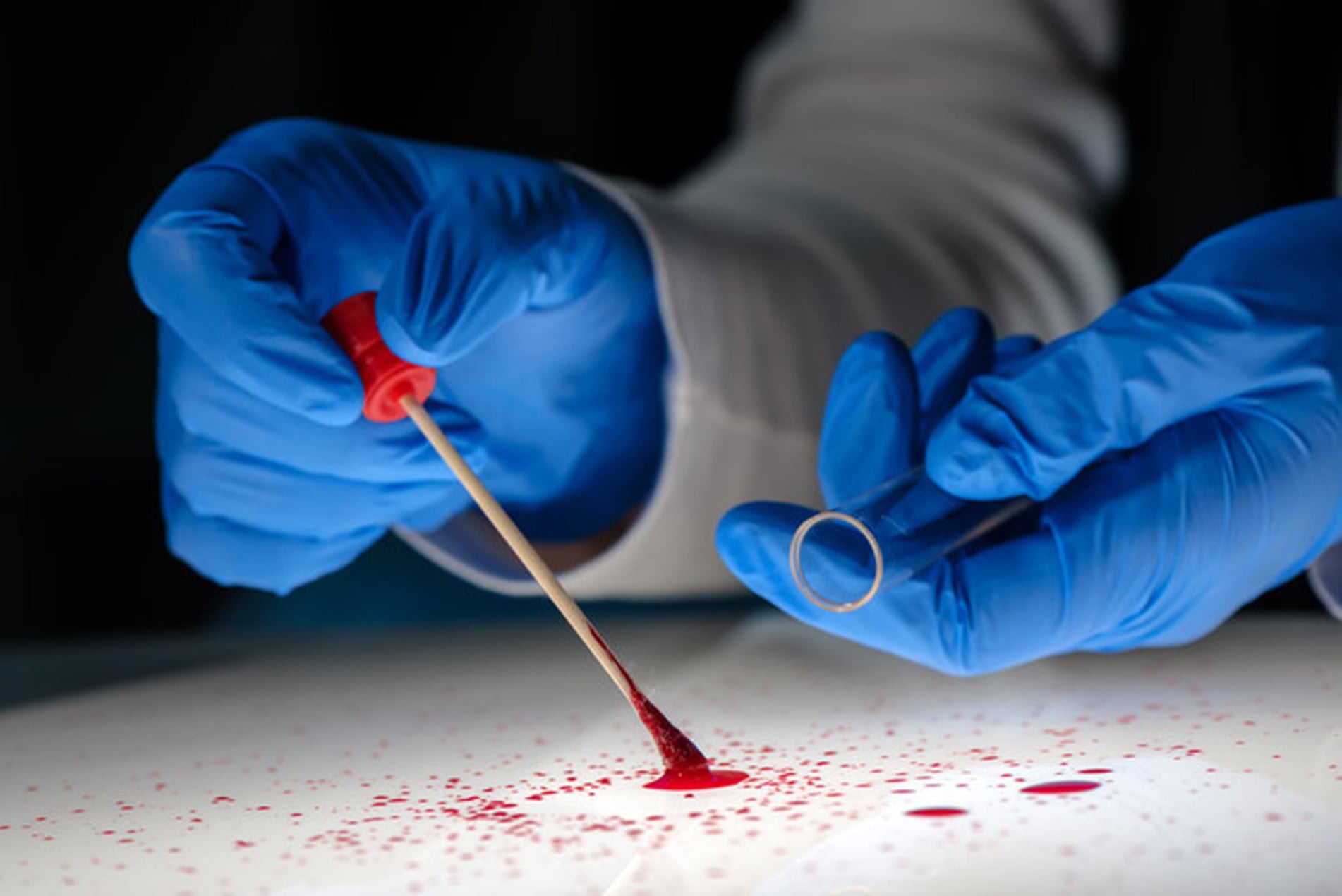
Every drop of blood at a crime scene tells a story – not through words, but through physics. The angle of impact, the speed of motion, the distance from which a force was applied – all become silent witnesses waiting to be decoded. Over time, this process of deciphering bloodstain patterns has evolved from an interpretive art into a scientific discipline guided by data, precision, and technology.
There aren’t many forensic science fields that have seen such a significant shift. Bloodstain pattern analysis (BPA) has developed into a discipline based on mathematics, fluid dynamics, and trace evidence reconstruction after initially depending on the instincts of seasoned detectives. These days, analysts view a stain as a quantitative occurrence subject to natural laws, a pattern originating from motion rather than mystery, rather than as a clue to be guessed.
For professionals like Luke Guinee, whose expertise spans both physical and digital forensics, this evolution reflects a broader shift in investigative science – from observation to quantification, from assumption to validation.
From Gut Instinct to Empirical Insight
Historically, BPA was built on experience. Investigators relied heavily on visual interpretation by assessing shapes, directions, and dispersions by eye. Although this instinct-based method was frequently successful, it was not repeatable. The possibility of two experts drawing disparate findings from the same data presented difficulties for both the inquiry and the testimony given in court.
Modern forensic science demanded more, and technology delivered. These days, analysts use software for trajectory simulation, 3D modeling, and high-resolution imagery to accurately and mathematically evaluate patterns. Stains are now digitally evaluated for factors including droplet size, velocity, and impact force. Reconstruction models made possible by these data points bridge the gap between observation and proof by accurately recreating occurrences.
This move toward quantifiable methods hasn’t replaced human expertise; it’s refined it. Analysts can now pair their trained intuition with computational evidence, ensuring that conclusions are both scientifically validated and contextually sound.
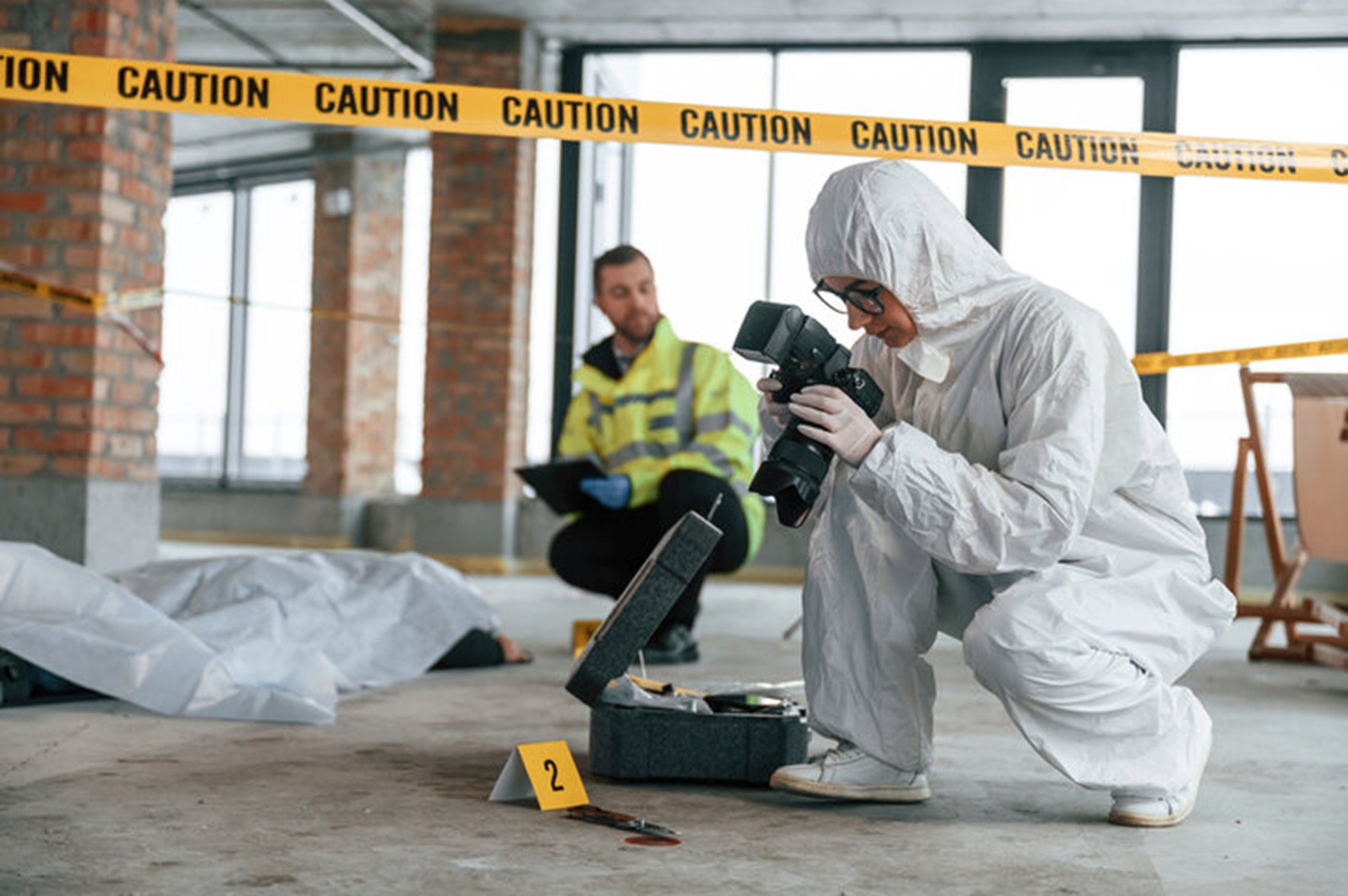
The Science Beneath the Surface
Fundamentally speaking, BPA is an exercise in applied physics. Blood behaves as a non-Newtonian fluid when it exits the body, impacted by impact velocity, air resistance, and surface tension. Numerous factors influence the patterns that are created, including the kind of weapon used, the distance from the target, the victim’s and suspect’s movements, and even the texture of the surface that was struck.
Correlation is where it gets complicated. A single stain may seem very trivial, but a field of spatter is a dataset with which one can identify the point of origin or even predict the sequence of actions. Analysts now use tools like laser scanning, photogrammetry, and spectroscopy to quantify these interactions. These techniques convert what once looked like chaos into measurable geometry, revealing the physics behind human behavior.
Technology’s Role in Modern Forensic Precision
The investigative workflow has been altered by the incorporation of technology. Analysts can compare test patterns with data gathered from scenes thanks to high-speed cameras that record impact occurrences in controlled environments. To further improve consistency among forensic labs, machine learning methods are now being investigated to help classify different forms of spatter based on training datasets.
Yet, as Luke Guinee often emphasizes in professional discussions, technology is only as effective as the judgment behind it. The true craft lies in interpretation, knowing which variables matter, which anomalies to question, and when to challenge the model itself. In forensic work, human insight remains the quality control that software can’t replicate.
The New Era of Reconstruction
The next chapter in BPA is likely to merge physical and digital forensics into a unified investigative lens. As the crime scenes have started involving both tangible and digital evidence like videos, sensors, or IoT data, the reconstruction of events have become more dependent on synthesizing multiple streams of information.
Analysts like Luke Guinee who navigate both domains represent the direction the field is heading: a fusion of physics, computation, and interpretation. This cross-disciplinary expertise will define the future of investigations – where data enhances instinct and precision amplifies understanding.
A Field That Never Stands Still
Because truth is a science that is constantly improving, bloodstain pattern analysis will also continue to develop. Every advancement in imaging, data processing, and experimental replication moves the field one step closer to total objectivity, which is a goal that characterizes the integrity of forensic work but is never entirely achievable.
In the end, BPA isn’t about the stains themselves. It’s about time – the precise reconstruction of moments that determine justice. The patterns may dry, but the pursuit of accuracy never does.